
"coffee in France Germany"
500 article(s) found
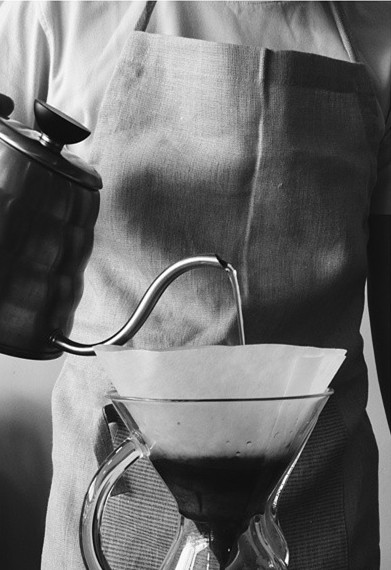
World coffee culture Nordic coffee culture Austrian Swiss coffee filter brewing coffee method
Central and Northern Europe likes coffee not as passionately as Italy, nor as romantic as France. People in Central and Northern Europe drink coffee rationally and gently, just like their national characteristics. European life and coffee, almost has formed an inseparable link, in addition to Italy and France in a different coffee drinking method, from Austria, Switzerland,

The 26th World Coffee Science Congress of Yunnan Coffee is the first time held in China.
The theme of this conference is to share the progress of coffee science. It is reported that this is the first time that China has held the World Coffee Science Congress. According to the organizing committee, the main venue of the conference is located at Continental Hotel in Kunming, with two branches in Dehong City and Chongqing.

What is the Cuban flavor of Cubita Amber Coffee?
Amber Jue Coffee is all picked by hand and washed with water to remove defective beans and other impurities to a large extent. The main export markets are Japan, France, Germany, Ireland, Canada and other countries. Known as the unique Caribbean flavor coffee, the Cuban embassy designated coffee. 1 Amber Coffee-Amber Coffee Cubita unique characteristics: nobility, tenderness

Grinding scale of Cuban Crystal Mountain Coffee Bean introduction to the taste and flavor of the regional treatment method of varieties
Cubita is Cuban coffee, which is mainly exported to Japan, France, Germany, Ireland, Canada and other countries. The cubita coffee entering the Chinese market is all selected from the pollution-free Crystal Mountain coffee beans in the high altitude areas of Cuba, which is a typical Caribbean coffee bean. All the granules of coffee beans are strictly selected according to the standard of sieve 17-19, and the selected coffee beans have large particles and high maturity.

Full-bodied and slippery Cuban Crystal Coffee Flavor characteristics Manor production area introduces boutique coffee beans
Cubita is Cuban coffee, which is mainly exported to Japan, France, Germany, Ireland, Canada and other countries. The cubita coffee entering the Chinese market is all selected from the pollution-free Crystal Mountain coffee beans in the high altitude areas of Cuba, which is a typical Caribbean coffee bean. All the granules of coffee beans are strictly selected according to the standard of sieve 17-19, and the selected coffee beans have large particles and high maturity.

Introduction to the Flavor and Taste of Fine Coffee beans in the Coffee Variety producing area of Crystal Mountain, Cuba
Cubita is Cuban coffee, which is mainly exported to Japan, France, Germany, Ireland, Canada and other countries. The cubita coffee entering the Chinese market is all selected from the pollution-free Crystal Mountain coffee beans in the high altitude areas of Cuba, which is a typical Caribbean coffee bean. All the granules of coffee beans are strictly selected according to the standard of sieve 17-19, and the selected coffee beans have large particles and high maturity.

Introduction to the Grinding scale of the Flavor description treatment method of Cuban Crystal Mountain Coffee beans with coarse Fruit aroma
Cubita is Cuban coffee, which is mainly exported to Japan, France, Germany, Ireland, Canada and other countries. The cubita coffee entering the Chinese market is all selected from the pollution-free Crystal Mountain coffee beans in the high altitude areas of Cuba, which is a typical Caribbean coffee bean. All the granules of coffee beans are strictly selected according to the standard of sieve 17-19, and the selected coffee beans have large particles and high maturity.

Cuban Coffee returns to the United States the flavor characteristics of Cuban coffee describe whether Cuban coffee tastes good
Professional coffee knowledge exchange more coffee bean information please follow the coffee workshop (Wechat official account cafe_style) Cuba coffee exporters are mainly Japan, France, Germany, Ireland and Canada. It is a typical Caribbean style coffee series. Coffee cherries are picked by hand, the maturity is just right, the granules range from 17 to 19 specifications, and are treated with water washing Seiko, with defects.

What's the difference between siphon coffee and hand brewed coffee?
Siphon coffee maker is most common in Taiwan and Japan. It is said that it was first invented by Scottish shipbuilder Robed Napier, and also appeared in Germany in 1830. Finally, it was continuously improved by France and Britain into the upper and lower parts of the coffee. Under the action of heating and atmospheric pressure, the siphon coffee maker makes the water go up (the air rises), and the coffee is filtered down after the fire is turned off (the cold air drops).
On the understanding of World Coffee
In France, cafes of different styles and sizes, streets and trees can be seen everywhere attached to buildings.

Those old cafes scattered all over Europe
If you travel to Europe, you can't miss the coffee culture there. Coffee shops over a hundred years old are not uncommon there. The one you turn around the corner may have been Hemingway's writing; the corner where you are sitting may have been filled with passers-by like Beethoven, Picasso and Xu Zhimo. The first coffee shop in LeProcope Paris was born in 1686.

Coffee users must know 25 common sense of coffee
1. According to legend, coffee was discovered by an Ethiopian shepherd named Khaldi in the 9th century. While herding the sheep, Khaldi found that the sleepy sheep looked very excited after eating the red fruit of an evergreen tree. Khaldi brought the fruit to a Muslim cleric who made the fruit from the coffee tree into a delicious drink. 2. Although

Refreshing and elegant taste of Cuban Crystal Mountain Coffee Flavor and Fine Coffee Bean producing area
The raw beans of Cubita coffee are selected from the pollution-free Crystal Mountain coffee beans in the high altitude area of Cuba. The particles of coffee beans are strictly selected according to the standard of sieve 17-19. The selected coffee beans have large particles and high maturity. Cubita coffee beans are all picked by hand, using water washing refining method to remove defective beans and other impurities to the maximum extent, plus experienced baking

What is Ole Coffee? What's the difference between Ole coffee and latte?
There are more than a dozen kinds of milk coffee on the menu of most coffee shops. For most people, milk coffee is more difficult to make at home. Lait au is an exception. Although many cafes use espresso, they can also be made with any high concentration of coffee at home. It is easy to make and has different names all over the world.
Burundian coffee flavor, Burundian coffee introduction
Following Cafe (official Wechat account vdailycom) found that Burundi Coffee opened a small shop of its own in 1930, which was introduced by Belgian colonists. Unfortunately, many of these farms are on the border with war-torn Rwanda, putting pressure on coffee production. Coffee production in Burundi: Burundi (Burundi)
Vietnam exported 966000 tons of coffee from January to May 2014.
In May 2014, Viet Nam exported 154000 tons of coffee with an export value of US $336 million. From January to May, Vietnam exported 966000 tons of coffee, an increase of 36.7 percent over the same period last year, and exports of US $1.96 billion, an increase of 29 percent over the same period last year. The average export price of Vietnamese coffee is US $2001 per ton. Germany and the United States are still the top two export markets of Vietnamese coffee, accounting for respectively.

Creative coffee cup German Villeroy coffee cup
Founded in 1748, VILLEROYBOCH is a famous German porcelain master and has been loved by royals and collectors all over the world. In 1748, the founder FRANCOIS BOCH set up a pottery factory in France. In 1767, the BOCH family moved the business to Luxembourg and was awarded as a royal manufacturer by the head of the Austrian Empire. BOCH and another ceramic family NICOLAS VILLE in 1836

Coffee basic knowledge Coffee Control must know 25 Common sense of Coffee
1. According to legend, coffee was discovered by an Ethiopian shepherd named Khaldi in the 9th century. While herding the sheep, Khaldi found that the sleepy sheep looked very excited after eating the red fruit of an evergreen tree. Khaldi brought the fruit to a Muslim cleric who made the fruit from the coffee tree into a delicious drink. 2. Although

Ethiopian Coffee Flavor with acidity and texture introduction to the characteristics of Fine Coffee beans in Manor area
Ethiopian people are addicted to coffee. In 2003, domestic consumption accounted for 42.3% of the total output, with a per capita consumption of 3 kg. But more than half of the coffee produced each year is used for export to earn foreign exchange. The main exporters include the United States, Italy, the United Kingdom, Sweden, Norway, Greece, France, Belgium, Germany and Australia. Before 1974, the right to produce, process and trade coffee was controlled by